Sunday, 24 May 2015

Achilles Report No69: Hydraulic & Steam Tests...

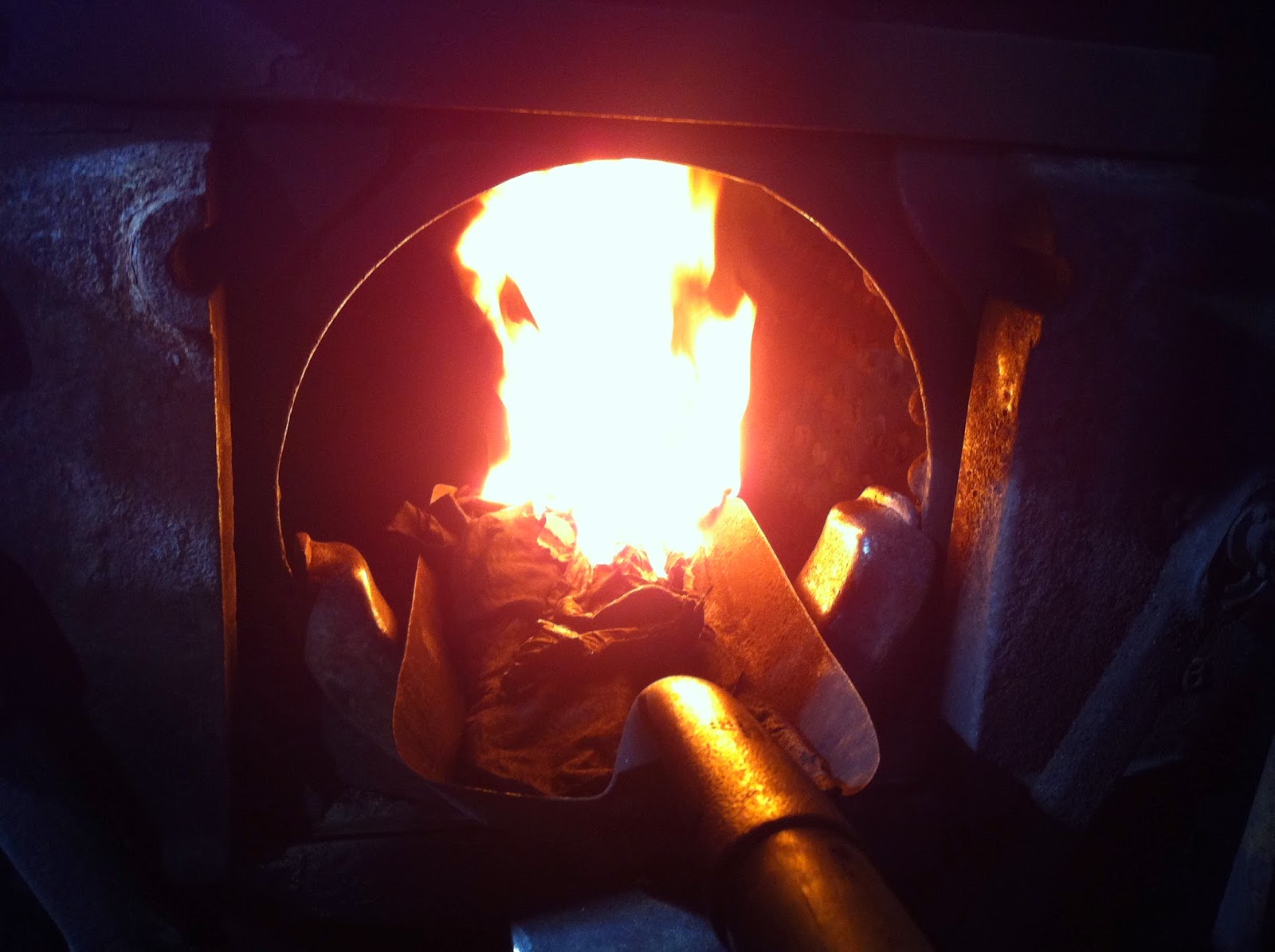
Hi everyone. Welcome to another "Achilles" report. Today the locomotive was at Ryton Pools for some official business: two exams to be precise. Though her tickets have yet to expire, I decided to have her tests done slightly early to allow for repair if (God forbid) she failed. The locomotive would have both her hydraulic test (every 4 years) and her steam test (every year) this afternoon. The process of examining pressure vessels and declaring them safe is something that is growing ever tighter. In some circles even Mamod boilers of no more than 15psi require testing. With loco's the size of "Achilles" however, the testing procedure has always been this way, barring a few alterations over the years. The locomotive was unloaded just after 1pm and duly rolled onto the steaming bays...
For the hydraulic test, the boiler is pumped up with water until pressure is made to one and a half times (135psi in our case) the working pressure (90psi). I believe the boiler has to hold this pressure for 10 minutes without blowing anything. In order to undertake the hydraulic, the pressure gauge is removed and blanked, all fittings are shut and the safety valves are blanked in favour of a special fitting to connect it to the test kit. The smokebox is also open and the grate/ashpan removed for inspection before and during the test...
The test kit pumps water into the boiler and maintains pressure against a calibrated gauge...
The locomotive held its 135psi very well and was leak free, much to my relief...
With the hydraulic exam passed, its time to refit the safety valves and grate in preparation for the steam test. The pressure gauge is also tested against the calibrated test gauge in order to make sure it reads right. With the pressure gauge cleared and refitted, we can raise steam as normal...
During the steam test, the safety valves must blow when required and must also hold the pressure at the red line with the blower on full chat. The handpump is also tested for operation as are the fittings and axlepump. Throughout all of this the boiler is again checked for any leaks or fizzes. Thankfully there were none and the loco passed: hurrah!...
With the riding truck attached and a clear track ahead, the loco is off to prove the axlepump some more. She is spotted here at Ryton Halt with the valves lifting...
Here is a clip of the loco chugging around the track with the spark arrestor hat on...

After a good few laps, some of which even saw Ken having a little drive, the loco performed very well. Ken reckoned he hadn't driven the engine for about 10 years! Here she is on the steaming bay again whilst being disposed...
So that's it, the tests are over for another year. The steam test is due in 14 months and the hydraulic is due in 4 years. I'm very pleased that she's passed, that saves any undue worrying in the near future! The loco was soon back home and ready for a good polish. Thanks for reading everyone. Best Regards, Sam...

Saturday, 23 May 2015

Memories of Shackerstone...

Hi all. A quick one from this evening. Tonight we attended a special talk at the Odd House near Snarestone, taken by SRS President Mr Dave Johnson. Dave spoke to us about the early days of Shackerstone: how the railway was founded, how they saved it and how they gradually rebuilt it. All in all it was a pleasant, humorous and interesting evening. Well done Dave! All the best, Sam...

Thursday, 21 May 2015

Atlantic Report No7: A Run Out...

Hi everyone. This evenings outing was to CMES' Ryton Pools track for the monthly Wednesday evening run. These evening excursions are just the ticket as long as the weather holds. An unpromising start this morning had led to a pleasant evening and my 3.5" gauge Maisie was the loco of choice for the run. I arrived at just after 6pm, along with three other loco owners. 'Eddie the Late' then turned up with his 3.5" gauge 2P, which was due to have a steam test. The two engines were soon unloaded and shared a steaming bay in the evening sun. The larger Atlantic is seen here in front of the Midland product...
My engine: 4436: had a few repairs to try out this evening and so I wasn't particularly optimistic. This is because in the past optimism of any form has resulted in a resounding failure so its best to not put your trust in anything! The engine had had the water pump repacked, the lubricator reset, the handpump repaired and a clack cleaned out & reseated so all four repairs would be tested tonight. I'd filled the engine with water and put wood on the grate before I left home to save time at the site. I need something to keep me occupied as there isn't so much brass on this engine!...
With a good fire lit in the box the engine came around swiftly. With the borrowed RPMR Guards truck attached and drain cocks hissing loudly, the engine backed along the run up rail and through the bendy beam. After a few more revolutions of her big wheels, the drain cocks can be shut for the evening. The C1 is seen here awaiting her first lap...
Getting away smartly, the Maisie performed well for the rest of the evening. Three out of four of the repairs were a resounding success, though the lubricator was a bit intermittent. I later found that the securing nut had come loose and so it wasn't working on every stroke, just the odd one. That's an easy fix that'll get done asap. Apart from that, the engine went very well and put in some good, fast running...
As the loco was running so well I decided to offer other people a drive of her. Both Dave and Emma enjoyed a good few laps with the engine and she continued to uphold her successful streak. Meanwhile, 'Eddie the Late' had raised steam, passed the steam test and was now running around the track. He asked me to join him for a run as ballast to give the 2P some work to do. With both of us on and safety valves blowing, the 4-4-0 pulled away. Below is a quick snap I took of the loco beginning the climb of Ryton Bank and speeding along as if to jump into another dimension!...
Sure enough the 2P climbed the bank with ease and was blowing off at the top. The engine is Don Young's 'Midland' with Joy valve gear. Eddie completed the engine, building her up from the chassis stage of construction. Its turned out a nice little machine and sets a really good pace on the track, though I wouldn't fancy making one with that complicated valve gear...its poetry in motion watching it go round. After my ride behind the 2P I caught up with my Maisie and had another lap or two as the final steam loco left on the track. She was still running well and had proved herself to be a free steaming and nippy engine. I am now very pleased with her...
"A Final Sunlit Shot"
After our final laps the engine steamed back down onto the steaming bays before disposal. Apart from the lubricator issue we had enjoyed some great, trouble free laps and I'm looking forward to taking her out again in the near future. Thanks very much for reading. Best Regards, Sam...

Monday, 18 May 2015

Sunday Sweet Pea at Ryton Pools...

Hi guys. This afternoon I was booked to attend CMES for one of my Public Running turns. The usual traction for these Sunday outings is the pairing of the Class 31 and Class 37 electrics but, to me, they don't have anywhere near the same appeal as steam. With this in mind I had emailed our Member in Charge (Eric) during the week to ask permission to make one of the train rakes steamed hauled. Eric duly accepted and I arrived at just before noon today in order to prep 0-4-0 Sweet Pea "Diane"; one of the societies engines. I did some of my first driving on "Diane" well over 10 years ago, when her late owner & builder Dan was in control. The engine is a particularly well made Sweet Pea and is normally free steaming. With the loco checked and filled with water, I lit a wood fire and turned on the electric blower. The Pea was then oiled up whilst she crackled away to herself. Coal was then added in turn until a thick, bright fire was built...
Due to the shallow grate of the Sweet Pea design, I've always found that a thicker fire, particularly when hauling a good load, is best. That way, if the blast pipe does rag the fire through then there is less chance of cold air coming through the gaps and knocking back your pressure. By 12:40pm both the Class 31 electric and "Diane" were stood at Ryton Halt with their individual trains awaiting passengers...
I set out with the valves lifting (80psi) on our first run, though the engine was sluggish to start. Normally the first trip with any engine is a 'cold one'. However, most unlike her usual self, "Diane" was very unresponsive and unforgiving for the remainder of her run. We weren't in trouble or anything, she was just proving hard work which always suggests something is amiss as this engine is normally hard to keep quiet! Despite shifting some good heavy loads and barking well on a good fire, the boiler was still not keeping pressure. Returning with 50psi is unheard of with "Diane"! After just over 90 minutes of running and with the queue growing each time, I decided enough was enough and "Diane" was replaced by the Class 37. Here she is just before we left the track...
With the Pea now back on the steaming bay and the two electrics attacking the queue, I decided to hunt for the problem. Sure enough, when I opened the smokebox door the impairment was plain to see. The spark arrestor mesh was clogged solid, so much so that everything between the top of the blast pipe and the bottom of the petticoat was thick with hardened oil. There was no way that the engine would be able to draw herself through with a blockage like that. Oh well, never mind, at least its not a serious mechanical issue! We later decided that she did well to pull anywhere near the loads she was pulling with so much of the mesh blocked: well done old gal'. The engine is seen here during disposal...
Following disposal of the Pea it was back to track duties for me, with just over an hour left to go until the 4pm closing time. The 37 and the 31 were working well and the queue had finally relented. I did a few trips guarding and one or two driving but, I tell you what, I can't find any enthusiasm for the electric contingent. I suppose we're all different but to me driving the electric is being unfaithful to your steam engine! Thanks once again for reading folks. I'm back at CMES again on Wednesday with the Atlantic - fingers crossed for the weather. Best Regards, Sam...

Saturday, 16 May 2015

Polishing A Barrel...

Hi all. Just a couple of hours spent this afternoon at Shackerstone. I arrived at around 1pm to find the BR Black liveried 3803 standing outside the loco shed in the warmth of the sun. The engine had had half of her barrel cleaned during the morning and so I opted to clean the remaining Drivers side whilst Jason tended to the warming fire. We were also joined by David on this occasion who showed us his latest, and very professional I might add, photobook creation. I left at around 3:30pm. All the best guys, Sam...

Sunday, 10 May 2015

A "Monty" Day at Evesham...

Hi everyone. Today was the return match at Evesham: round two. I arrived at just before 8:30am before changing and signing on. Owners Adrian & Sandra were already on site and preparing the railway for its day in service. As I walked around onto the shed frontage I noticed that "Egwin"s shed wasn't open; most odd I thought, as she is the general 'training engine' so they say. However, just then from behind the next door, out rolled "Monty": the railways newest fleet addition. Adrian stood proudly as the gleaming red 0-4-2 glistened under this mornings overcast skies...
The explanation that followed was that "Monty" had been pressed into service as both "St Egwin" and "Dougal" were out of action for boiler washout and annual inspection. I must admit, with the unsettled weather that plagued the skies this morning, I was glad of the cab! Then followed the usual procedures: lighting up, fitting the air blower, cleaning the brass, polishing the paint and finally oiling and greasing the motion where necessary. The EVLR has spent a lot of time and money on "Monty" in order to release her into service this year, following a lengthy overhaul. She is a 1996-built Exmoor product, and in her former life was "Markeaton Lady". The engine worked at Markeaton Park on the railway there, wearing a blue livery. It really worked its heart out there and when boiler repairs were required the money wasn't available, thus turning a potential overhaul into a sale. The poorly engine was taken on by the EVLR and now looks completely resplendent. The engine is now named after Simon de Montfort, who's grave is local to Evesham. The "Monty" aspect came from a decision to keep the name easy to understand for children and rightly so, as they are perhaps the railways best customers. By 10:30am, "Monty" stood at the head of the 10:30am train for Evesham Vale...
The first two trips would be taken by Adrian, with me doing the 'water monitor' tasks. I was very impressed with "Monty": she rides well, pulls well and there isn't a knock or a bang in the motion. The overhaul has really done its job and produced a very pleasant and aesthetically pleasing little engine. Through the standard gauge world you do sometimes end up on some real junk, and so its so refreshing to get on something that is so good, so new and so pretty. Below we see a quick cab shot of "Monty", with all the usual fittings in view and the firehole doors slightly cracked for firing...
For the 11:30am trip I was on the handle and was surprised at just how little coaxing "Monty" needed to get the 3-coach train up the banks. Adrian then kindly let me drive for the rest of the day and I had a lovely time. Its a lovely little engine...
Here, "Monty" awaits an afternoon departure from Twyford Station...
Interestingly, each time we stood at Evesham Vale Station, the locomotive and her name were proving very popular. The "Monty" name is very popular with both children & adults alike, with the shining engine being impressive to both. The loco is seen here on an afternoon turn, about to leave Evesham Vale...
For the 4pm trip, I was joined on the footplate by "Egwin"s owner Steve, who was as complimentary of "Monty" as I was. Steve is another of the EVLR's trainers and had something different in store for the return run. At Evesham Vale we uncoupled, drew forward through the point and then reversed around the balloon loop light engine. The loco then stood at the head of the train on the 'wrong end' as it were. This was now a typical EVLR gala-style arrangement. Here we are about to leave Evesham Vale the opposite way...
The reason for this exercise was to get experience driving the other way, down certain banks and up others. I must admit, it was strange for a start but enjoyable once we got "Monty" onto a good climb. The main bank coming away from the station was taken much quicker because the trailing point was now straight through rather than out of the spur, but that was the only real difference. I think I prefer this way around as the engine works harder: great fun! After the 4pm there was one more trip to do before "Monty" was disposed. She went on shed happily where she had her fire dropped, ashpan cleaned and paintwork polished before going to bed. It had been another great day at the EVLR and I must thank Adrian, Sandra and Steve for a most enjoyable day out. All the best, Sam...

Saturday, 9 May 2015

3803: A Warming Fire...

Hi everyone. With the prospect of going to Shack Friday rather than Sunday, I thought why not. As long as steam is rostered to work on the Saturday, a Friday task is often to put the warming fire in. For those not in the know, a warming fire is exactly what it sounds like. It is not only time consuming but also bad practise and potentially damaging to take an engine from cold to steaming straight away and so a gentle warm-through is performed. The boiler of a locomotive often contains several different materials in different conditions and with different expansion rates. Therefore, so as to impose the least possible stress on each of the separate components, the boiler is warmed through gently, often over a period of well over 12 hours. Today for example, the locomotive was lit up at just after 1pm, but she won't be expected to be in service until around 10:30am tomorrow morning! To start preparations for a warming fire the engine has to be thoroughly checked over as normal. All fittings, mudlids, plugs, tubes and stays have to be looked over as well as naturally checking the water level in the boiler. 3803 had been cleaned out on Wednesday following our excursion on Monday (click here for that) and so was pretty much ready to go. With a long handled Lucas shovel that came to hand, I spread half a dozen shovels around the back corners before getting some dirty rags together. "Ignition!"...
The warming fire is only lit on the rearmost 1/3 of the grate, if that. We normally aim for a fire that starts at the rear of the box, makes its way 18"-24" in and then slope it at around 45 degrees until it reaches the firehole doors. The rest of the grate remains completely clean and untouched. With the rags blazing on top of the few shovels of coal, I added a good half a pallet or so of dry wood and a few rotten bits I'd found lying around, and then added a final few oily rags for good measure. The doors were then shut and the damper opened to get the initial heat there. Then, using the Lucas again, I added quite a bit of coal to black the fire out. The fire was built up in the normal manner, with little at the bottom and a lot at the top. I tend to make the fire up to the level of the firehole door or just above to start with. This is because you must remember that all that stacked wood underneath will burn through any minute and the bed will fall considerably and you've got to have something to bite on...
With the fire burning brightly and quietly, I left 3803 to it. The next job was to get the Brasso out and, in a lonely fashion, make a start on cleaning the cab brasses. When you're on your own, its a quiet site, really quiet. There is nothing in the air but birdsong and the rustling of trees as the sky that had so threatened rain finally let go. Outside however was a bit of interest: the re-sited boiler of Dunlop No7. The boiler is now ready for water with all of the tubes and stays fitted. Its really coming on...
Having had a quick gander at No7s boiler it was back into the shed to carry on with those brasses over a few sitcom repeats played on my phone. (You need something to stop you talking to yourself!). Meanwhile the loco makes all sorts of strange noises. It bangs, it creeks, it groans. Gradually, she's expanding, so little in fact you wouldn't notice, but she does. I sat with the engine until around 4:30pm, by which time she'd been lit for well over 3 hours. The fire was still doing what I'd expected, burning bright at the foot of the slope and with the fresh new coal still sat at door level. The natural progression of the fire will gradually eat into the fresh coal as the bed burns down, thus basically feeding itself. Before I headed off, it was time to add those final few shovels which would mean the difference between no steam and 10psi in the morning for Fireman David. With the fire crackling away, gauge glass now isolated and the lights gradually being switched off, we take one final look at 3803 before I left, in the gloom of the engine shed...
Naturally, as I left, it was now raining well! Luckily 3803 was tucked up and boiling quietly away to herself in the shed, in the dry. Thanks very much for reading guys, Sam...

Tuesday, 5 May 2015

A Days Driving: The Return of 3803...

Hi all. Today I was booked to drive the Great Western 2884 Class 2-8-0 No3803 at Shackerstone. Following the now completely non negotiable McDonalds stop, I arrived at around 7am. The trainee for the day: Jamie: was in the car park just unloading his kit as I arrived. After signing in and reading the notices, we wandered up to the loco shed where we found David; the fireman for the day. 3803 was still showing 20psi on the clock from yesterdays exertions and, sure enough, lurking beneath the frames were a pair of brand new springs. The springs were fitted on Saturday and the engine had managed a trouble free day in service yesterday. I did my usual job of FTR-ing the loco whilst David & Jamie cleaned the grate, emptied the ashpan and lit the fire. I then started my lengthy job of oiling up the locomotive, starting with the hydrostatic lubricator in the cab. The engine left shed at around 10:30am and hissed over onto Platform 2 road in order to take water and buffer up to the waiting stock for the first train at 11:15. The legend that is Fireman David is caught here watering up...
With the 3000-gallon tender now full, 3803 rolled back the short distance onto the train. All coupled up, it was time for me to fetch the tea. With a sunny day in prospect I was determined that we'd have an enjoyable outing, though we did leave late on the first train. It was, I may add, no fault of ours or 3803s but some late arriving passengers. In this preserved railway setting we have to try and wait for our customers where we can but this does knock your time back. Anyway, getting away around 8 minutes late, 3803 barked out of Shackerstone under Barton Bridge. From there, we're in pretty much open countryside. The black 2-8-0 ran easily down into Market Bosworth, ticking and spitting away. A few passengers joined us at Market Bosworth before we continued on for Shenton, where we enjoyed a sunny arrival...
The first trip seemed relatively well loaded, with 60-odd passengers aboard. 3803 was running well and looked a treat in the midday sunshine. She is seen here heading tender first up through Carlton towards Hedleys, with me looking from the drivers side listening to the engine...
3803 Returning to Shack (M.Heseltine)
The second trip saw us leave Shackerstone just about right time, though an influx of questions and answers from the admiring public did slow up our run round. However, we are always happy to chat as that's half the game with our hobby. The second trip was most enjoyable once again, though it was (much to David's amusement) coats on for the return run...the breeze is chilly when you aren't firing! For the third trip David took the controls and I decided to have a crack at firing. We had a paying footplate passenger on this trip in both directions; quite a rarity but all good money for the railway. David is seen here in control...
At Shenton, 3803 duly ran round and David is spotted here, in between coupling up. I had stopped to take a quick snap having checked the axles for heat and reoiled the wheel back faces...
After a good run back to Shackerstone we decided it was time to take coal. This new Scottish stuff does seem to burn away quicker and so you seem to use more for the same gain. Therefore, we played it safe and put a bucket or two in using the JCB. The loco then had to take up her place at the head of the 3pm trip, and we even had another paying footplate passenger!...
For the 3pm trip, I took her down to Shenton and David brought her back. Jamie was getting on very well with the fire and no problems were encountered, apart from a distinct lack of tea! For the final trip I was back on the handle again and David was firing. Having had to water again we had lost another few minutes and the culmination of the days lateness meant that the 4:15 trip left 10 minutes late but that isn't bad considering. The 38' is pictured here being prepared to leave Shenton with the 4:50 trip, though the lamp still has to be moved to top bracket to signal 'local/stopping train'...
After a good run back to Shackerstone, the big 38' was moved steadily into the engine shed for disposal. At this point we have to fairly well kill the fire, fill the boiler, isolate everything that needs isolating and fit the chimney cap. The loco is also scotched (chocked for the aeroplane lovers) for safety reasons, though the handbrake is also firmly applied. The engine is spotted here during disposal...
In front of 3803 stood a line of silent industrials. From right to left they are "Sir Gomer", Dunlop No7 and "Richard III". It shouldn't be too long before "Gomer" can groan about the place again, and No7 should resteam sometime this year, but I have little hope for No3...
All in all another grand day aboard the footplate of 3803 in good company. I must thank Jamie & David for their efforts today and I'm glad to say that the railway made a good profit today with some good loadings and busy trains. All the best guys, Sam...

Saturday, 2 May 2015

Achilles Report No68: A Visit to Rugby...

Hi guys. With the prospect of some good weather and a free track, Eddie & I had made a plan to take the engines to Rugby MES' tracks today. The loco of choice from my end was "Achilles", and Eddie took along his 7.25" gauge Stafford saddle tank. We arrived at the site at 11am before duly unloading onto our relevant tracks. As "Achilles" was the only loco operating on the 5" gauge metals, I opted just to steam up on the track to save unlocking the various steaming bay areas. The loco is seen here steaming up with her usual smoke effects plain to see...
Meanwhile, over on the 7.25" gauge steaming bays, Ed's much larger Stafford type "Archie" was well on her way to steaming...
Having gone through the usual oiling procedure and with a good fire in the box (house coal always works!), "Achilles" was coupled to her riding truck before being readied to move...
For the next couple of hours myself, Eddie & special guest Mr Britt ran the engines at leisure around the separate tracks. The 5" gauge line is a nice easy run for the tank engine and short enough to probably do three or four continuous laps (perhaps more) without stopping for water. On her mixture of steam & house coal she certainly never runs short of steam! The 7.25" gauge line has always been much longer than the 5" contingent, but over the winter has also received a large extension to its metals. The ground level line is now most impressive and I was lucky enough to drive it aboard "Archie" later in the day whilst Mr Britt looked after "Achilles". Below is the footage I took from our running session today...

After a good few hours running and lots of whistling, the duo stopped for disposal at pretty much the same time. It had been a great afternoon filled with tea, chatting and steam: what more could you want? "Achilles" had run very well indeed though she is now getting some good expansion link slap. The wear has now found the remaining worn parts: the expansion links! You are always chasing knocks with steam engines. Each time you take up wear or replace bushes or pins, the wear finds the next available worn point. Oh well, apart from the knocking, she's perfectly well and steams and pulls perfectly fine. As long as her hydraulic test goes OK in June, I'm sure she'll find her way onto public running at CMES all being well. That's always a good chance to clean the tubes out! All the best everyone, Sam...

Wednesday, 29 April 2015

Atlantics: Small Meets Smaller...

Good afternoon all. Just a very quick post from today. Whilst pottering around in the workshop I noticed that a parcel had arrived at the house. Inside was another new toy: my 00 gauge Bachmann model of the GNR Atlantic No251. I ordered this some time last year, perhaps October time, not long after the NRM had announced their build. 251 is the only survivor of Ivatt's large boilered C1 4-4-2 Atlantic class and is part of the National Collection. The engine is currently at the NRM's other base: Shildon: and is on display to the public. As far as I know, commercially made models of the C1 haven't been available in 00 gauge before and the new locomotives were sure to prove popular. My main reason for ordering one was of course my bigger C1: the LBSC Maisie Atlantic No4436 which I bought last year. With her in mind I had ordered the LNER liveried variant that Bachmann offered, but following some research it turned out that the later model came with the LNER modifications. 4436 never received such mods and remained in GNR condition despite livery changes. This made my order change at the very last minute to the Great Northern liveried 251 model, simply because it came with the same outline and features as my 3.5" gauge engine. This afternoon, both Atlantics were pictured in the garden in the sun. In that picture, the 00 gauge model is completely dwarfed by the live steam 4436, though the small size of the Bachmann engine makes its big sister look even more huge than normal! Hopefully we'll see 251 running on the garden line in the summer. Cheers all, Sam...