Sunday, 18 September 2016

Tyseley: Two Panniers, A Peckett and a Pacific...

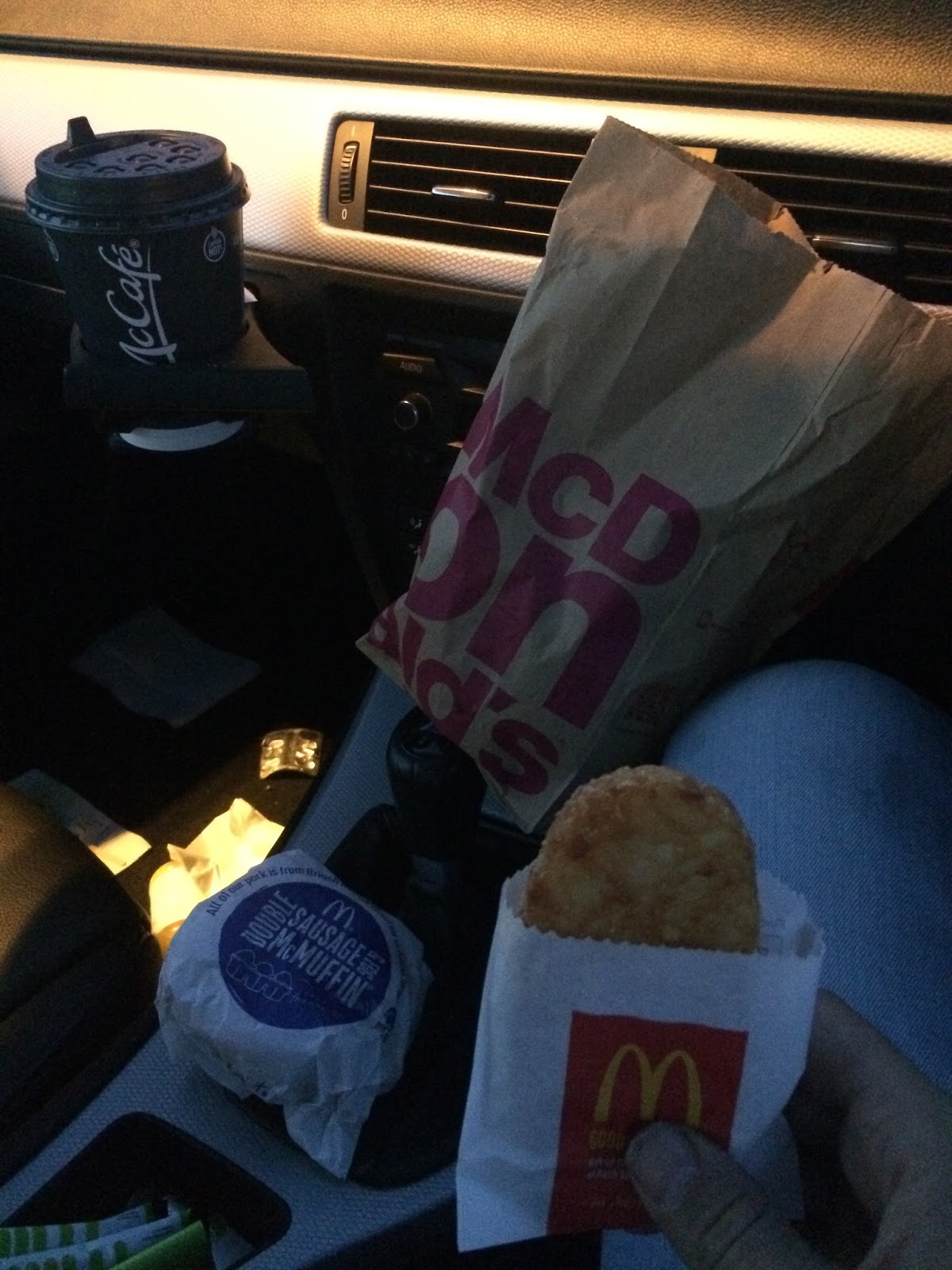
Evening all. This morning it was Day 2 of "Flying Scotsman"s weekend at Tyseley. I arose blurry eyed at just gone 5am ready to start my day. After a good run into Birmingham, the now traditional McDonalds breakfast was enjoyed upon arrival at a still dimly-lit Tyseley. People may joke about my steam day eating habits but it is the only way I can start my day: don't judge me...
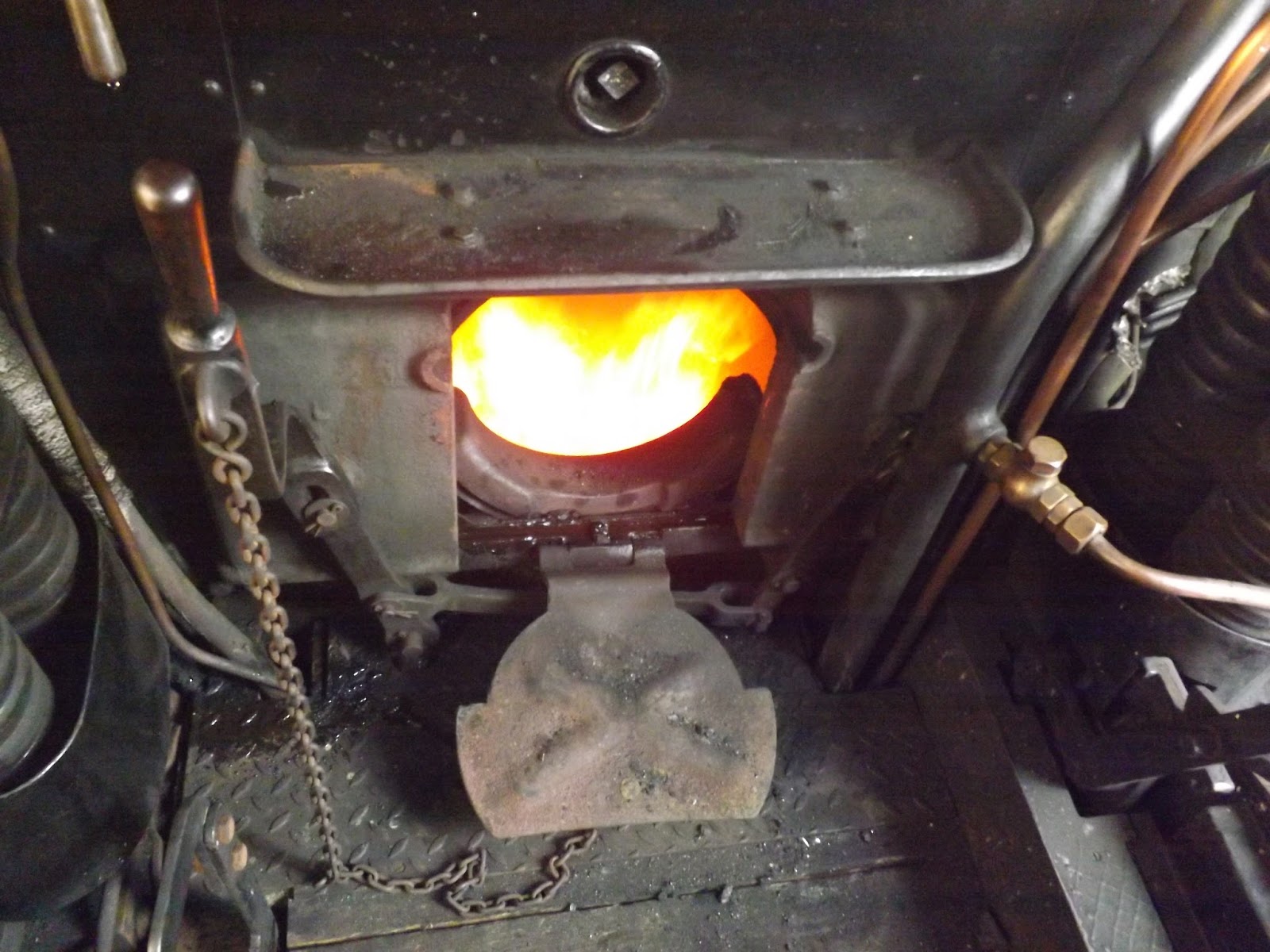
Having changed into my overalls, I wandered down the alley and into the site before heading to the Mess Room. A few more blurry eyed volunteers were discovered before we headed out into the yard to find the engines. Once again I was asked to light up and oil the Pannier Tank 7752 and so, having raked through the last of yesterdays fire, it was time to light a fresh one. A bed of coal was laid on the grate before a pile of rags was lit up on the shovel. It wouldn't take long to wake up 7752 as she still had 20psi on the clock...
"A Saturday Wake-Up For 7752"
With some blazing rags on the grate, wood was added on top as well as more coal. 52' was then left to get on with it and I headed off to the oil store to refill the big oil bottle. Motion oil comes in the form of 220-grade (cylinder oil is 680 to 1000 depending on your super-heating applications) and the large bottle is used to fill the smaller feeders. Going around 52' I started with the axleboxes, which include a variety of wick-feed boxes, keep pots and horn feeds. Meanwhile, whilst you're oiling, the engine is coming around slowly. Sister engine 9600 was just across the way, steadily coming to the boil...
Oiling the anatomy of a Pannier without a pit can require the skills of a contortionist. With the RH big end at its lowest position I did manage to slide between the balance pipe and the running boards, ending up straddling the crank. In this position I could access everything but trying to get in 'over the top' is hard work and you need arms like Mr Tickle to competently reach everything without the need for movement. There is a lot of motion carefully squashed into these frames but the set-up creates a very powerful engine. Once you've been around the eccentrics, big ends, expansion links and die blocks its time to squeeze out and move to the front end. The front end includes the slippers, packings, spindles, slides etc...
"Anatomy of a Pannier Tank"
The vacuum pumps on Great Western engines often take a paraffin-oil mix whilst the hydrostatic lubricator for the cylinders and regulator will need filling with cylinder oil. With everything on 52' oiled, I drove her down and onto the turntable. After turning, the engine steamed gently back up the middle road to wait at No20 disc signal. 9600 was just taking water and, following that, would collect the ECS for the shuttle train and draw it clear of the points. I find Pannier Tanks quite handsome in their lines, as seen on 7752...
By now my embryo fire from earlier had turned into a blaze. I believe the current coal is Scottish and you only have to show it the fire and its burning away...
When the disc went to the off position, I reversed 52' (with drain cocks hissing loudly) out of the middle road and onto the demo line. After buffering up, I coupled on to the train before creating vacuum to the required 25 inches. With the Platform 1 home signal pulled off, I pulled forward after acknowledgement from 9600. We then stopped to water 7752 before continuing on into Platform 1. "Flying Scotsman" then steamed away for her Saturday morning turntable session, leaving an open view of the LT Pannier... 
Once again I was asked to go on 9600 and duly gratefully accepted. Before I headed off to change into my smart overalls (prep overalls are filthy!) I got the camera out to grab a shot of 60103 on the Tyseley turntable. Who says steam doesn't draw punters?...
Gresley's famous A3 Pacific "Flying Scotsman" stands on Tyseley's turntable...
Having washed and changed, I returned to the demo line to find 9600 simmering away at the head of the stock. Fireman Andrew had things well in hand and the needle was hugging the red line ready for the off...
"9600 Ready For A Saturday Of Shuttle Trains"
For the rest of the morning and into the early afternoon we steamed back and forth on 9600. Passenger numbers were strong on this busy day and the two Panniers seemed to be putting the miles in up & down the yard...
"Myself & Andrew On 9600 Between Trips" (Pic - E.Brown)
We did three trips per outing, stopping at the box before steaming back up to the yard extremity. 9600 is certainly in good voice and steams very well indeed. It was a most pleasant morning driving her. Our relief came at around 2pm and I was asked to go on the little works shunter: Peckett No2004 of 1941. I tell you what...what a lovely little engine this is...
"Peckett 2004 Stands Alongside The Castle"
The Peckett was built by the Bristol firm in February 1941 as a W7 type and is kept in operational condition at Tyseley as the works shunter. I believe that the 14" cylinder 0-4-0 spent some of her working life with the GEC. I hadn't driven the Peckett and so it would be nice to tick it off. Like most industrials the Peckett is fairly simple to drive. Everything is done on a steam brake or handbrake with basic controls. 2004 is in pretty much original condition, unlike most Pecketts which have been given vacuum and steam heat. Its just lovely: so responsive. You can hear the valves seat when the regulator opens, you can hear the steam heading down the steam pipes to the valve chest. Its just a very pleasant little thing to be on. Some industrials are changed beyond recognition to give them passenger hauling abilities but 'No1' is the opposite. Its a lovely thing. After a few runs up and down the yard with the match truck and the Toad, we were asked to pull onto the turntable for a demo...
"Driving Peckett 2004 of 1941" (Pic - A.Williamson)
After a few spins on the turntable to the commentary, we buffered back up to the Toad and steamed back through the shed and into the yard. Pannier Tank No9600 is seen here approaching the yard extremity as we watch from the footplate of the Peckett...
After a few more runs back and forth with the punchy Peckett, we steamed back onto the turntable in order to drop the short freight onto a pit road. The Peckett was then returned to the yard ready for disposal after a most pleasant little afternoon with her...
"Bedtime For The Peckett"
The Peckett just goes to show that it doesn't have to be a big engine...this little engine made me smile. What a lovely little machine. I've been on plenty of industrials over the years, most of which are fairly horrid as someone has tried to change them into something they aren't. 'No1' on the other hand is the exact opposite: original and wonderful. This was a brilliant day on two Panniers and a Peckett: thanks to all at Tyseley for a great day. Cheers all, Sam...

Saturday, 17 September 2016

"Flying Scotsman" Comes To Tyseley...

Hi all. In the steam preservation sector, if there is one name that shines brighter than all others it has to be the LNER A3 Pacific "Flying Scotsman". Built at Doncaster in 1923, "Scotsman" has gone on to become arguably the worlds most famous steam engine and the continued media hype surrounding her return to active service this year can only fuel that fire. Over the weekend of September 16th-18th, Tyseley Loco Works was to welcome the famous A3 to its Birmingham site for a special event held in her honour. The pacific arrived from her National Railway Museum home in York on the Tuesday, with the event set to begin this morning. There would be 6 locomotives in steam in total, shuffling around the site for the enjoyment of the public. Pre-booked ticket sales had been very strong indeed and a busy weekend was anticipated. I arrived at the site of the former 84E shed at around 7:30am this morning. After spotting "Scotsman" from afar, I was put to work lighting up and oiling up Pannier Tank No7752, currently painted in London Transport livery as 'L94'. 52' was joined by younger sister 9600 and the little Peckett 0-4-0 No1...
"Two Panniers and a Peckett"
Checks were made on and around the locomotive before lighting a good pile of paraffin soaked rags on the shovel. When the flame gets going you can throw the blaze down onto the grate and begin adding the wood...
"A Friday Morning Fire for GWR 7752"
Built by the North British Locomotive Company in 1930 as GWR 7752, the red Pannier has been under the care of Tyseley since her retirement from LT service in 1971. She was the last steam locomotive to operate on London Underground and her former London colours were added in 2011 to commemorate 40 years since that final run in the capital. This morning, 52' came around quite sharpish whilst I scurried around her with the oil cans. The Panniers employ the traditional Stephenson's valve gear and access (when you aren't over a pit) is under the tanks whilst lying on the running board. The two 0-6-0s would be working the shuttle train up & down the site throughout the weekend and the BR Black No9600 soon went off to collect the stock. Once the coaches had been dragged clear of the points, 52' was brought out and onto the back. Watering then ensued...
The Panniers were then moved down into Platform 2 road so that "Scotsman" could be removed from her resting place in Platform 1. The event was to open at 11am this morning and the famous pacific had to be in place on the turntable ready for the arrival of her admiring public. The A3 was hauled up the site by the Class 08 diesel before coming down the middle road with drain cocks hissing loudly. She was quite a sight during this rare moment of bright sunshine...
Whilst "Scotsman" was being photographed on the turntable, the Panniers were moved to Platform 1 road with the shuttle stock. The Gresley A3 would spend the rest of her day in Platform 2 offering tender walks and footplate visits whilst behind her in the Pullman cars the team would be serving Afternoon Tea. With the first passengers loaded, we began to offer the shuttle rides. Leaving the platform, 9600 would haul us up to the yard extremity before we brought the train back down with 52' in charge. Each outing would involve three trips up and down the yard, allowing those on the platform to photograph the full length of "Flying Scotsman". I spent a while firing 52' before being moved on to driving 9600...
"Pannier Tank No9600 of 1945"
The rest of the day involved many shuttle trains. Up and down the yard we steamed with many happy passengers aboard. Tyseley was certainly a busy place today. The weather was changeable: a mix of overcast and sunny spells...
"7752 Meets The World's Most Famous Engine"
9600 is a beautiful engine to drive. The cab layout is like most other Panniers but this one in particular is just like a new un'. Everything is tight as if brand new and there isn't a knock or a bang anywhere. She is a lovely machine and just does what you want. Here we see an afternoon view looking forward from the fireman's side of 9600...
As the day drew towards its close the sun really came out. It was warm and bright and allowed me to get another good capture of the workhorse 9600...
We did our last shuttle service at around 4pm before 52' was shunt released and allowed onto the middle road for disposal. I then set back the stock on Platform 1 road for stabling overnight before the black 0-6-0 was taken down into the yard to meet up with her red sister. The Pannier's were then stabled for the night, apart from a quick trip down towards the gate for coaling as both bunkers were running on dust by now! After a most enjoyable day, I wandered over to have a look at the mighty A3. With the public having now gone home it was much easier to grab some unhindered shots of Gresley's famous engine...
"Scotsman"s fame has become something unrivalled in the steam sector and the love the public have for her is just remarkable. Her rise to fame began in 1924 when she represented the LNER at the British Empire Exhibition at Wembley, becoming something of a company flagship. As built she was 1472 but was renumbered 4472 and named just before the exhibition. In 1928 the famous "Flying Scotsman" non-stop services began between London Kings Cross and Edinburgh and 4472 hauled the first train. By then she had the 8-wheeled tender which could hold 9 tons of coal and had a water scoop, in order to allow the engine to complete the 392 miles non-stop. Her large tender was also of the corridor variety, allowing a crew change on route without the need of a service stop. The commencement of these non-stop runs was no doubt the beginning of her fame as her own name is still very much associated with that famous train. In 1934, "Flying Scotsman" became the first steam engine to officially top 100mph. The GWR's "City of Truro" had claimed to have done it in 1904 but it was never proved. 4472 was rebuilt as an A3 pacific (she was originally an A1) later in her life and was renumbered 60103 by BR in 1948. The three-cylinder class were also fitted with Kylchap exhausts and double chimneys under BR which very much improved their performances.

Though fairly well known, "Flying Scotsman" was not put on the original National Collection list of engines and looked set for the scrapyard when withdrawals of her class commenced. Luckily, Alan Pegler stepped in and saved the A3 following her final run in BR service in January 1963. He bought her outright, with an agreement to operate her on BR metals until 1973. Pegler had the engine returned to as near original condition as possible, with corridor tender (she lost her corridor tender in 1936), single chimney and LNER livery. The engine went on to operate specials on the main line even after the end of BR steam in 1968. By then, "Flying Scotsman" was the only steam locomotive operating on the British main line network. Pegler, knowing that watering facilities would soon be in short supply, had also bought a second corridor tender and so 4472 ran for a time with two. After a tour of the USA in the early 1970s, "Flying Scotsman"s owner was close to bankruptcy and the engine ended up stranded on US soil with debts to be paid. William McAlpine stepped in to save the engine in 1973 and she returned to Britain. Since then, having been owned by Pete Waterman and Tony Marchington too, the engine was bought by the NRM in 2004. After a painstaking £4 million overhaul that took 10 years to complete, she finally returned to service in BR guise with double chimney and smoke deflectors early this year. I could go on forever about the history of 4472: there is just so much to say but nothing you can't read about elsewhere. Here we see the footplate of "Flying Scotsman" as the engine beds down for the night at Tyseley...
"On The Footplate of Flying Scotsman"
I think the engine looks very nice in her BR form. The single chimney and LNER livery is lovely but when you're at the stage that you'd have to pretty much completely rebuild the engine again to get her back to single chimney form, she may as well stay authentic and keep her well performing double chimney arrangement...
The engine will be on display at Tyseley for another two days before heading off to the Severn Valley Railway next week. It was a pleasure to see her again today and to stand on her footplate. I think this is the first time that "Flying Scotsman" has featured on this blog, apart from in bits at York that is. I did travel behind her on a Tyseley trip to Didcot in 2005 but that was before the blog started. A final view tonight of the famous pacific...
"60103 'Flying Scotsman' Beds Down At Tyseley"
Thanks for reading guys. Its been a lovely day with Pannier tanks and the famous A3 at Tyseley and now its time for home, a cuppa' and a wash before we do it all again tomorrow! Many thanks all, Sam...

Sunday, 11 September 2016

"Jack Lane" Returns: A Wet Day at Statfold...

"Contemplation On Jack Lane" (Pic - I.Whitfield)
Evening all. So, after another great season, the third and final Statfold Barn Railway Enthusiasts Day of 2016 has drawn to a close. This morning I was in the car before 5am, making my way over to the headquarters of the SBR. There was of course the now traditional McDonalds stop on route before continuing to Statfold to enjoy my breakfast before we were let into the site. The weather on the drive over could only be described as absolutely foul and it wasn't going to get much better for most of the day. Anyway, with breakfast enjoyed and the car unloaded, we wandered across through the rain to the shed frontage to sign in and collect some tools. The Hayling lads (who camp on site) do a sterling job of lighting the embryo fires in most if not all of the engines on these early starts and so I found a very wet "Jack Lane" crackling away outside the carriage shed with the time just having turned 6am. With the wood burning brightly, I added a good quantity of the Scottish coal before allowing the green 0-4-0 to get on with it. They always say "a watched pot never boils" and this is definitely the case with steam engines. At 6:30am, "Jack Lane" was warming through nicely...
As the first of the days light began to appear, the crews around the site were preparing their various engines. Statfold is often hidden by a cloud of smoke & steam at this time of the morning and today was no exception. "Jack Lane" is fairly simple on the oiling front, with wick-feed axleboxes and the standard inside Stephenson's valve gear. There is a mechanical lubricator for the steam circuit and front mounted cups for the cylinders. This was the scene on shed at 'Statfold 2B' as the light came up...
Quarry Hunslet's were produced in a few forms by the Leeds-based manufacturer and found fame in the Welsh slate quarries. Many of them survive in preservation and there are three originals based at Statfold. New builds "Statfold" (2005) and "Jack Lane" (2006) were built from scratch at the SBR and have remained in active service there since then. "Statfold" is currently undergoing its 10-year overhaul whilst "Jack Lane" is fresh back into use. They are an attractive, pokey and workable locomotive and have might far beyond their size. I've had the pleasure of crewing a few examples at both SBR and Bala over the years and have always found them to be nice little engines. You may be wondering about the name: Jack Lane was the base of the Hunslet Engine Company in Leeds. Below, a forced-flash image of "Jack Lane" showing the outside rods, inside eccentrics (two per side) and the mechanical lubricator. The leaf springs are also evident, located just above the running boards...
As time drew on we began to wonder where 'Eddie The Late' had got to but none of us had even checked the time at this point. Then he came wheezing in apologising for his lateness which, in hindsight, had he not mentioned it we wouldn't have noticed! So there you have it folks, everyone's favourite alarm clock snoozer 'Eddie The Late' has done it again! Apologetic, Ed offered to make us a cuppa' for his shame and so we wandered up onto the shed frontage. Many engines were being prepped all around...
Back at the engine things were going nicely. "Jack Lane" was coming around gradually whilst our coupled-on mate for the day (the Corpet) was doing the same. Our Off-Shed times at Statfold seem to get earlier each time and this time we were off well before 8am. Due to the size of the railway now and the amount of locomotives and stock that require positioning before running can take place, set-up and wind down take longer and thus we need to be on the ball. When the call came, Driver Eddie took "Jack Lane" down and around the sharp curve into the headshunt, with the Corpet hissing along behind us. The Corpet then hauled us up into the platform to couple up to the waiting stock: the L & B set. The unusual pairing of the Krauss and the Davenport then joined us in readiness for our upcoming ECS positioning run...
At this point we normally have a nice cob and a cuppa' before the Safety Briefing. With the briefing complete, we all returned to our steeds before setting off on our various duties. Soon enough, we found ourselves at the balloon loop with the L & B set. The Krauss and the Davenport had returned to Statfold with the train staff which would be returned to us on the next arriving passenger train. It was wet and rather chilly as we awaited our path on this late Summer Saturday...
"Waiting At The Balloon Loop"
When the next Low Level train arrived we received the "Right Away" from the Guard before steaming back up to Oak Tree Halt. A welcome addition on the platform there was a staff 'Tea Stall' which we duly patronised. When the next train came in, we received the staff for the Statfold section and away we went. Upon our arrival back at Statfold Jnc Eddie turned to me, no doubt to say "now wasn't that a wonderful run", before noticing that his tea had emptied itself neatly all over the floor. His face of disapointment was priceless. We were then uncoupled before using the turntable to access the shed frontage via the running shed through-line...
Whilst on shed we coaled up the bunker on "Jack Lane" before the shunt signal came off allowing us down into the headshunt once again. Our next train would be a freight working, hauling one of the SBR's attractive wagon rakes. This time the Corpet was leading and took us easily down to the balloon loop once again. Passing "Isibutu" at Oak Tree, her crew were most amused at our soaked condition on "Jack Lane". It was very pleasant today to have the company of JB & Alex on the Corpet. They were very pleased to have at least some of a cab and certainly looked dryer than us! Their chuntering over the cab back-sheet whilst in the reverse direction gave us a good impersonation of Waldorf & Statler of Muppets fame. They were quite reminiscent of that pair leaning over the balcony offering 'constructive' criticism!...
"Waldorf & Statler Review Our Performance"
Following a "Right Away" from the Guard, Driver JB got the Corpet underway out of Cogan Halt with the freight train...
"Driver JB At The Regulator Of The Corpet"
Meanwhile, Driver 'Eddie The Late' on "Jack Lane" looked more like a member of the RNLI in his traditional holiday wear of a hooded mac and gloves...
"Fisherman 'Eddie The Late' On 3904"
Having steamed around the balloon loop we were stopped on the approach to the junction hut as the next train was just pulling in with our return token. The two green locomotives waited impatiently for the off...
After a pleasant run back up to Statfold, with "Jack Lane" running in reverse of course on the inside, the pair were asked to remain on the back of the freight for the next run. The beautiful bulk of "Isibutu" would haul the train but, having struggled out of the balloon loop last time on wet rails, banking assistance was a possibility. "Isibutu" is a huge machine on 2ft rails but still only has four driving wheels which don't carry all of her potential adhesive weight due to the addition of the bogie. Even so, the big Bagnall got on alright hauling us neatly through the sodden fields on the back of the freight. By now my cap looked like it had fallen in the tank - the peak actually provided a nice guttering effect! After our run with "Isibutu" we were back on the front again and immediately left on our fourth trip of the day, with the freight train yet again and with "Jack Lane" still on the inside. Our roles had reversed on the engines by this point and myself & Alex were at the regulators...
"Corpet & Jack Lane" (Pic - G.Cryer)
The rain was easing slightly as we reached the balloon loop for our brief rest stop...
"Myself and 'Eddie The Late' On Jack Lane" (Pic - C.Bassett)
Leaving the balloon loop bound for Oak Tree, the rain kindly let loose once again...
"On The Move" (Pic - G.Cryer)
Things were bleak as we arrived back at Statfold in the fairly hideous weather...
Just then the Davenport steamed in with the Krauss leading her and we all commented on how well the old American engine sounded. The Davenport's driver: Will: wandered across for a natter and Mr Whitfield duly caught us gassing...
"Chewing The Fat" (Pic - I.Whitfield)
The freight rake duly departed on another run whilst "Jack Lane" and her French partner steamed down through the station before being given the signal to go up onto the shed. After only a few minutes the shunt signal assumed the 'off' position once more and we were soon back in the headshunt awaiting our next move. The merriment amongst the crews of the pair is highlighted below...
"Happy Crews On 'Jack Lane' and the Corpet"
The beautiful "Isibutu" duly steamed in with our next working: a passenger set...
When the Bagnall had stopped safely in Platform 2, we were given the signal to set back and the Corpet duly hauled us up into the station to couple on...
Eddie duly made up the fire in preparation for an imminent departure...
Another vanity image of myself aboard "Jack Lane" as the rain continued to fall...
"Driving 'Jack Lane' at Statfold" (Pic - I.Whitfield)
Following our fifth trip around the fields we were uncoupled from the Corpet after arrival back at Statfold. The French 0-6-0 duly steamed up onto the turntable before heading to the shed frontage whilst "Jack Lane" awaited some shunting duties. Driver Eddie resumed his place at the regulator once again. The time was fast approaching 3:30pm and plans were afoot for the large task of winding down ready for the cavalcade. We were placed in the Goods Siding to await a shunt release job with the freight wagons that we had hauled earlier...
"Freshly Overhauled 'Jack Lane' Simmers In The Goods Siding"
When the freight train returned "Jack Lane" was duly called up onto Platform 1 road to couple on, but not before 'Eddie The Late' was captured in his traditional pose...
Having shunted the freight train into the Goods Siding with lots of effort from the 2006-built 0-4-0, the engine was returned to the headshunt to await the next move. She would be used to put the coaches away in the new carriage shed and so, having swapped roles again, we banked the ex-Bredgar rake into the new shed with the little Simplex doing its best to pull from the leading end. I had to give "Jack Lane" most of the regulator to do that job as the climb up and around that sharp curve is certainly steeper than it looks! She sounded a treat climbing up into there as the assembled audience looked on...
"At The Carriage Shed" (Pic - I.Whitfield)
With the 0-4-0 still steaming well, we returned to Platform 1 road to collect the recently arrived L & B set before putting that away too. The Quarry then ran light engine out into the headshunt before being sent yet again into Platform 1. This time we coupled on to some waiting vans as well as the Hudswell Clarke "Alpha". This would be our cavalcade formation and we duly joined the others in the line. "Jack Lane"s screaming hooter was blown to start the chorus of piercing whistles, thus ending the days formal proceedings. The engine then steamed back out onto the Low Level railway to join some of her shed-mates as we awaited a path back towards Statfold Jnc station and the sheds. "Jack Lane" still looked a treat...
Having been shunt released from "Alpha" and the vans, I took "Jack Lane" up through Platform 1 and onto the turntable. After turning, we steamed across the traverser and into the traverser shed where the engine was disposed. The little engines were to be disposed of in here and "Jack Lane" came to rest alongside much older sister "Cloister". She was built in 1891, a mere 115 years before "Jack Lane"! I think it was quite poignant if a bit poetic to enthuse over the situation...
"A Last Look At 'Jack Lane' At Bedtime"
With the fire raked through, the boiler well filled and everything in the appropriate stabling position, we left "Jack Lane" for the night after a brilliant day. I must thank the SBR for their hospitality and their invitation once again as well as of course my late arriving companion 'Eddie the Late' for his company. I must also thank JB & Alex for their humorous company during the day as well as Mr Bassett, Mr Cryer and Mr Whitfield for kindly sending in images for use in this post. It is much appreciated! Click here for Geoff's great rail diary site. Finally, click here for a great video of the days events. Thanks for reading this heavy post everyone and I hope you enjoyed the ridiculous ramblings once again. All the best, Sam...

Saturday, 10 September 2016

Preparations At Statfold...

Hi all. This morning, having finished work at 11am, I was in the car and on my way over to Statfold Barn. Tomorrow will see the SBR's final Enthusiasts Day of 2016 take place and 16 locomotives would be in steam, providing a very intensive service for the visitors. I arrived at the SBR headquarters at just before Midday and, having changed into my overalls, wandered through the running shed and out onto the frontage. A handful of engines were already there being readied for action. Down at the new carriage shed, I found our steed for tomorrow: Quarry Hunslet "Jack Lane". The green 0-4-0 is fresh back into service after her speedy 10-year overhaul. The engine didn't need that much doing as she wasn't that bad to start with, having been completed brand new at Statfold in 2006. Unlike slightly older sister "Statfold", "Jack Lane" has enjoyed less frequent use and has been kept in pretty much 'as new' condition. Also at the new carriage shed were the Corpet and the Penrhyn pair: "Sybil Mary" & "Marchlyn". We'll be coupled up to the Corpet tomorrow for our double headed outing. The Corpet is to be crewed by JB and Alex whilst the Quarry is looked after by myself and well known late arriving steam enthusiast 'Eddie The Late'. JB spent most of his time commenting on how everything he said may end up on the internet. He may well be right...
"Alex & JB In Good Spirits With The Corpet"
Throughout the early part of the afternoon the Corpet and "Jack Lane" were gradually prepared for tomorrows duties. I lit a wood fire in the engine and then set to polishing the paintwork before buffing up the brasses. The forecast for tomorrow isn't that promising, probably due to the fact that we're rostered on a cabless engine. If we'd have had an armoured Simplex it would have been a heatwave! Nevertheless I'm sure we'll have a good day no matter what the weather brings...
We have since dubbed the new carriage shed "Statfold 2B" (2B was of course the old Nuneaton shed on the Midland region). It was quite pleasant down there amongst the trees, away from the hustle and bustle of the loco shed. I don't think you'd get a much bigger locomotive than those here up there mind as the sharp curve on the approach would probably commit large engines to the ballast! I eventually left the SBR at around 4pm with "Jack Lane" simmering away happily with a dead fire on the grate and 20psi on the clock. The warming up exercise had been completed and we're now all set for tomorrow. Cheers all, Sam...